
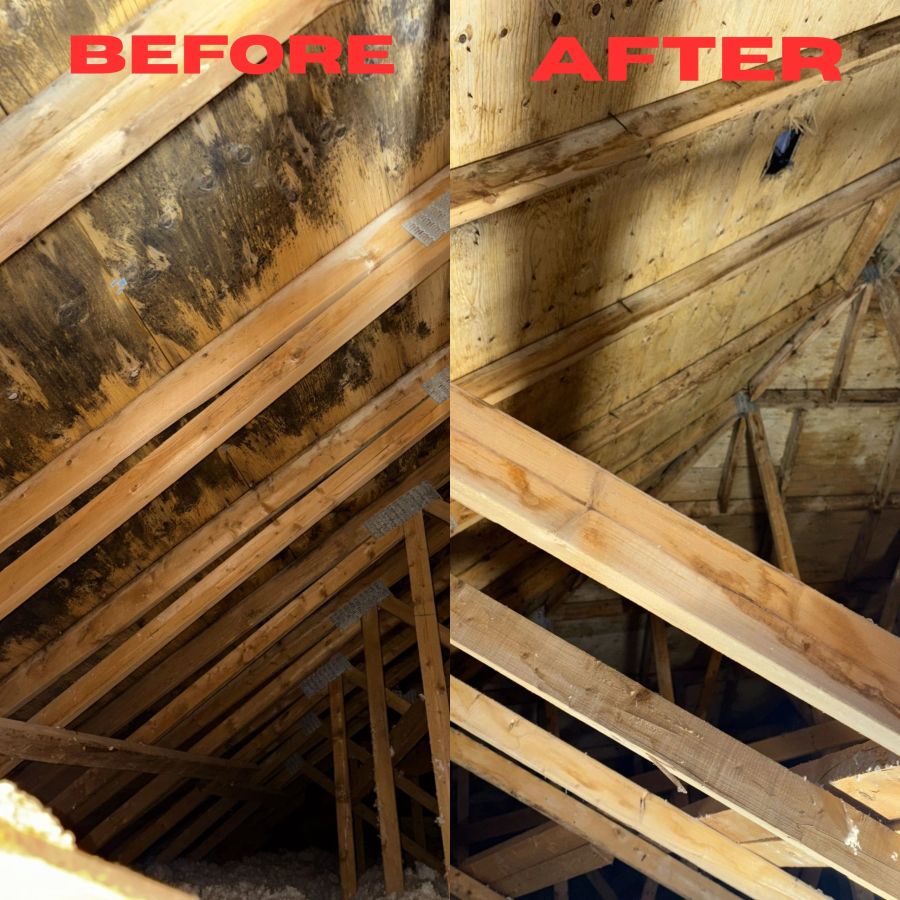
Condensation on cold roof sheathing
In cold weather, roof decking can be much colder than the air in the home. When humid indoor air escapes through ceiling gaps, the moisture can condense on the underside of the roof and support growth.
Bathroom or dryer exhaust
An exhaust duct that terminates inside the attic releases warm, damp air exactly where it can condense. Ducts should be checked for disconnection, leakage and proper exterior termination.
Blocked or unbalanced ventilation
Soffit vents covered by insulation, inadequate exhaust venting or airflow short-circuiting can leave sections of the roof deck colder and wetter than others. Ventilation should be assessed as a system, not by counting vents alone.
Roof leaks and exterior entry
Flashing failures, damaged shingles, ice-dam conditions and penetrations can wet the same framing repeatedly. Staining patterns and moisture readings help separate an active leak from older damage.
How ASM prevents a repeat
Remediation addresses the affected surfaces, but the closeout also identifies moisture-control work. That may include roof repair, exhaust correction, air sealing, ventilation changes or insulation guidance depending on the inspection.
- Identify the moisture pathway
- Contain and remediate affected framing
- Review insulation condition
- Document ventilation or repair needs
- Inspect completed work
This guide references current federal guidance. Read the full source for health and cleanup details.
Health Canada: Mould and indoor moisture guidance ↗