What "mold testing methods" means and why it matters
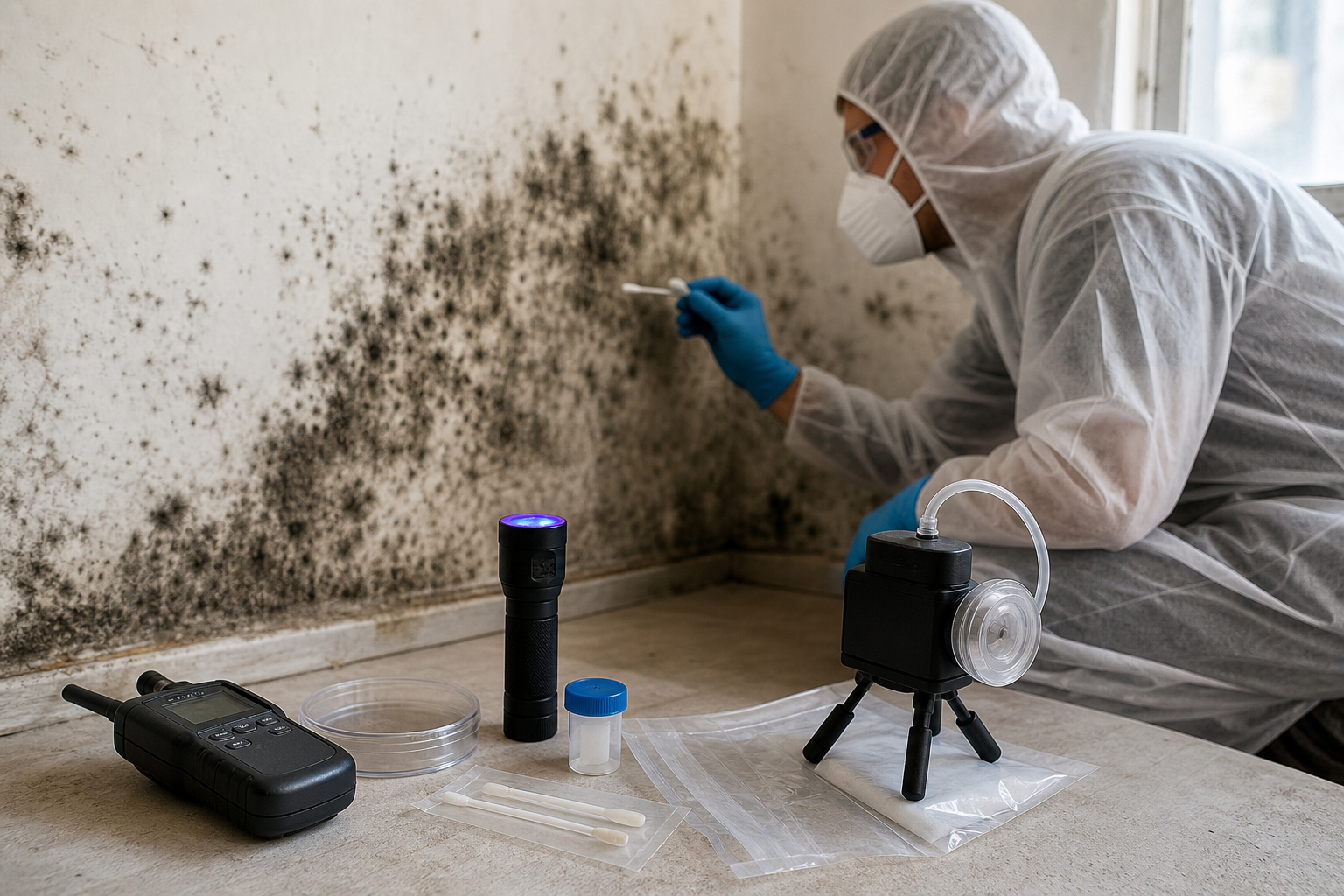
“Mold testing methods” describes the laboratory and field techniques used to collect samples that show whether mold is present, what types of spores are there, and where contamination might be hidden. Testing is distinct from an inspection. A trained visual inspection coupled with a moisture assessment can identify most problems that require immediate action. The United States Environmental Protection Agency recommends that sampling and laboratory testing are not always necessary and that sample analysis should follow methods endorsed by professional organisations such as the American Industrial Hygiene Association and the American Conference of Governmental Industrial Hygienists (AIHA and ACGIH) when used for decision making. For details see the EPA guidance on sampling and testing for mold Is Sampling/Testing for Mold Necessary?.
Common questions testing answers
- Is there hidden contamination in a wall cavity, attic insulation, or HVAC system where visual access is limited?
- Are occupant health complaints likely linked to an elevated indoor spore concentration?
- Do buyers, sellers, or property managers need laboratory documentation for a transaction or a warranty?
Limits of testing and the risk of delaying cleanup
Testing can be useful for targeted questions but it also has limits. Current sampling and analysis methods each have constraints and collecting samples can delay cleanup and raise costs if stakeholders wait for lab results before controlling moisture or repairing leaks. The Canada Mortgage and Housing Corporation notes these practical limits and warns that testing should not postpone necessary remediation actions. See the CMHC guidance on mould testing and sampling for housing managers for further context Mould in Housing Information for First Nation Housing Managers.
A short decision checklist: when to test and when to inspect only
Use this checklist to decide whether you need laboratory sampling or whether a prompt professional inspection and moisture control are the right first step.
Checklist steps you can do now
- If you see visible mold or smell a persistent musty odour, start with a professional visual inspection and a moisture assessment.
- Note size and location. Small, isolated patches on nonporous surfaces are usually removed without lab tests.
- If occupants have unexplained or severe symptoms, record those details and consider targeted testing in consultation with a sampler.
Red flags that justify immediate professional response
- Active leaks or standing water
- Mold in HVAC equipment or ducting
- Large contaminated areas or contamination behind walls
- Immunocompromised occupants or confirmed health incidents
- Disputes in a sale that require documented evidence
How testing may delay cleanup and add cost
Because sampling, chain of custody, and lab turnaround add time and expense, both the EPA and CMHC advise that testing should be used to answer specific questions rather than as routine justification for every remediation. If moisture control and removal are clearly required, remediation should not wait for test results. See the EPA sampling guidance and CMHC notes for context.
Main sampling methods and how each is collected
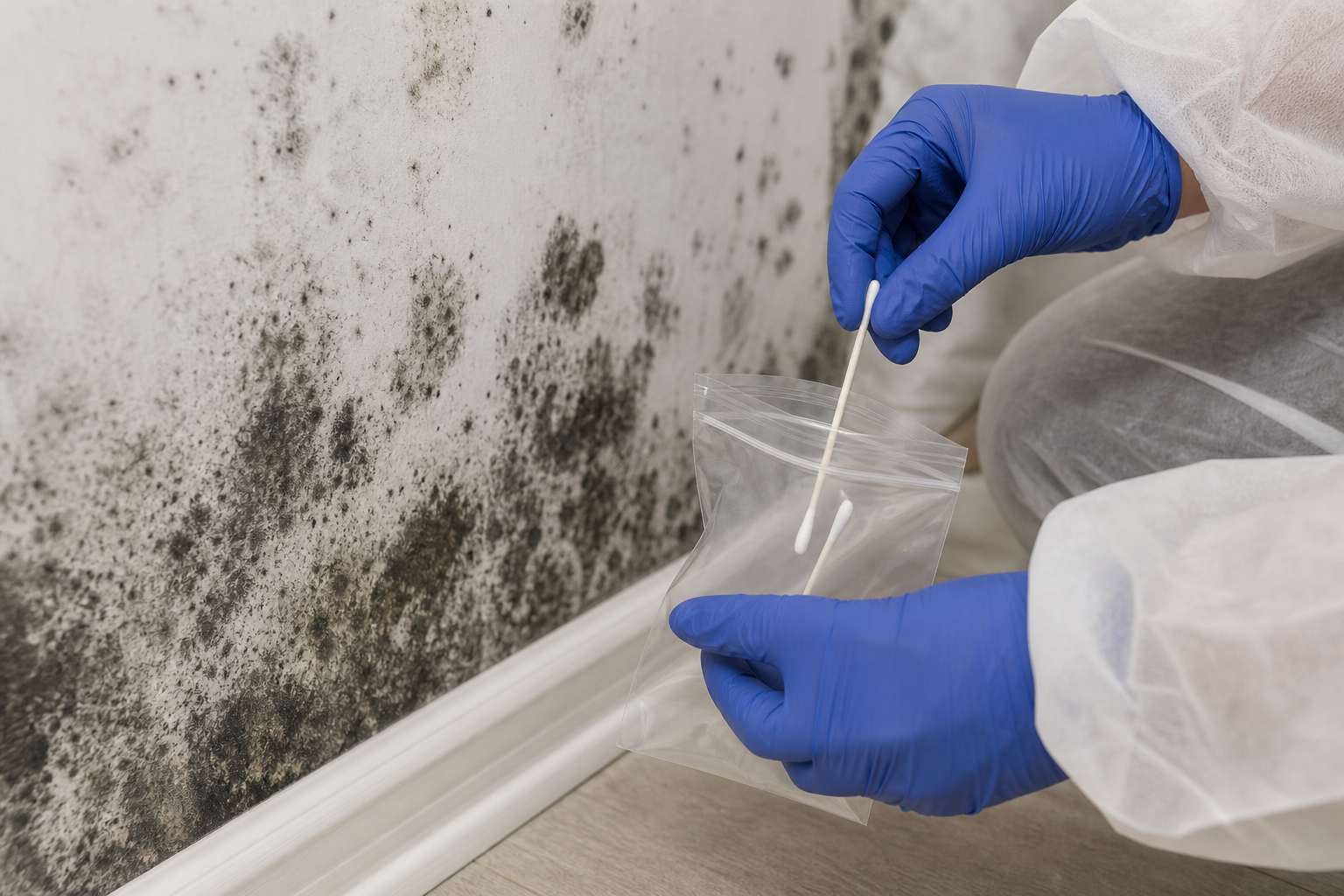
Below are the common mold testing methods and what each method measures in practice.
Air sampling (spore trap and volumetric air cassette)
How it is collected: A pump draws a measured volume of indoor air through a spore trap cassette. The cassette captures airborne particles that are later counted or analysed by a laboratory.
What it shows: Air sampling estimates airborne spore concentrations at the time of sampling. It is useful when there are inhalation concerns or suspected airborne contamination from HVAC systems.
Limitations: Air results are time sensitive and can vary by activity, humidity, and ventilation. Air sampling should be interpreted alongside inspection and moisture data.
Surface sampling: swabs and tape lifts
How it is collected: A sterile swab is rubbed over a suspect area or a piece of clear tape is pressed onto a surface and removed. Both are sent to a lab for microscopy or culture.
What it shows: Surface samples identify whether mold is present on a specific surface and can support species identification.
Limitations: Surface samples do not quantify airborne exposure and may not reflect hidden contamination behind materials.
Bulk sampling
How it is collected: A piece of building material or insulation is removed and submitted whole to the lab.
What it shows: Bulk samples can determine the presence and extent of contamination inside materials and are helpful when contamination appears embedded in construction materials.
Settled dust and ERMI-type dust sampling
How it is collected: Dust is vacuumed from a defined area into a collection device and analysed. The Environmental Relative Moldiness Index (ERMI) compares mold DNA marker levels to a reference population.
What it shows: ERMI provides a comparative profile of mold species in dust but it does not prove current active growth. ERMI and DNA methods are useful for research and some occupancy questions, but they require careful interpretation.
Moisture mapping and thermal imaging
How it is collected: Moisture meters and thermal cameras map damp areas without destructive opening. These tools guide where to collect lab samples or where to perform invasive inspection.
What it shows: These non-destructive methods identify likely sources of growth and reduce unnecessary sampling by targeting the most relevant locations.
What a sampler will record at collection
- Exact location of each sample
- Indoor and outdoor conditions including temperature and relative humidity
- Sampling volume and method details
- Chain of custody documentation for lab submission
How labs analyse samples and which standards to trust
Laboratories use a few distinct approaches. Understanding them helps when you are reading a report.
Typical laboratory outputs and how to read them
Common outputs are spore counts per cubic metre for air samples, presence or absence narratives for surfaces, colony forming units for culture results, and DNA marker levels for PCR or ERMI tests. Reports should include method descriptions and detection limits so you know what the numbers mean.
Culture versus non-culture (PCR) strengths and limits
Culture methods grow viable organisms and can miss non-viable spores. Molecular PCR methods detect DNA from viable and non-viable material and are more sensitive, but they may not indicate current activity. Both methods add value when selected to answer specific questions.
ERMI reports: comparison, not diagnosis
ERMI and similar dust indices compare species patterns to reference datasets. They can suggest higher relative moldiness but they do not identify active leaks or replace a moisture assessment.
Standards and accreditations to prefer
Because interpretation depends on standard methods, ask laboratories to use AIHA or similar validated analytical methods referenced by the EPA. The EPA specifically recommends following AIHA and ACGIH recommended methods when sampling is performed EPA sampling guidance.
DIY test kits versus professional sampling: what each can and cannot do
DIY kits are affordable and fast. Some kits collect samples that a lab can process at the molecular level, so the laboratory sees the same spores a professional sample contains. However, interpreting a positive or negative result without inspection context is a common pitfall. For a Canadian perspective on DIY kits and interpretation see the Canadian DIY guide to home mold inspection DIY Mold Inspection: Complete Canadian Guide.
When a DIY kit is reasonable
- You want a quick check for visible mold areas before contacting a professional.
- There is no active leak, no HVAC involvement, and no at risk occupants.
When to skip DIY and call a professional
- Large visible contamination, active leaks, or mold in HVAC systems
- When lab grade documentation is required for a real estate transaction or warranty
- When occupants are highly sensitive or immunocompromised
How testing results are used in remediation and Ontario real estate matters

Test results can refine the remediation scope, show whether hidden materials are contaminated, and support documentation for buyers, sellers, and agents. In practice many remediation decisions begin with moisture control and visible removal rather than waiting for lab reports. ASM integrates testing into a practical workflow. ASM offers Ontario-wide same day response, free inspections with moisture assessment, and will collect laboratory samples when they help define scope or provide required documentation. Remediation follows with HEPA filtration, containment, and EPA-approved products, and a Mold Remediation Warranty Certificate can be issued upon completion and inspection. Learn more about ASM service features on the company website ASM Mold Removal.
Choosing a qualified sampler and laboratory in Ontario
Use these practical vetting steps when arranging sampling or a lab report.
Minimum credentials and documentation to request
- Written chain of custody on every sample
- Method descriptions in the report and reference to recognised analytical methods (AIHA or ACGIH)
- Experience with residential attic, basement, and HVAC sampling
- Clear turnaround times and price for additional analyses
Questions to ask a sampler or lab
- Which analytical methods will you use and why?
- Can you provide a chain of custody form and a method summary with the report?
- How do you recommend interpreting results in context of a visual inspection?
What to expect in a lab report
A useful report lists the sample identifier and location, method used, detection limits, numeric results or presence/absence, and an interpretive note. If the report lacks method details, request clarification before relying on results for remediation or legal decisions.
Frequently asked questions
When is mold testing necessary versus a visual and moisture inspection?
Testing is necessary when you need objective documentation for real estate or legal disputes, suspect hidden contamination not reachable by inspection, or when occupant health concerns require an airborne exposure estimate. For many visible mold problems, a prompt inspection and moisture control are the priority and testing is optional. The EPA discusses when sampling is and is not useful in decision making Is Sampling/Testing for Mold Necessary?.
What is the difference between air sampling, surface swabs, bulk samples and an ERMI test?
Air sampling measures airborne spores at the time of sampling. Swabs and tape lifts examine specific surfaces. Bulk samples test pieces of material. ERMI and dust sampling analyse settled dust DNA to provide a comparative mould profile. Each method answers a different question and they are chosen to match the decision that needs to be made.
Are DIY mold test kits reliable enough to decide on remediation?
DIY kits can collect material that a lab can analyse, but without a professional inspection their results can be misleading. For simple checks a kit may be reasonable, but skip kits and call a professional when there are large stains, active leaks, HVAC involvement, or vulnerable occupants. A Canadian DIY guide explains these trade offs DIY Mold Inspection.
How do I choose an accredited lab or qualified sampler in Ontario?
Choose a sampler who documents chain of custody, uses AIHA or equivalent methods, and has experience in residential settings. Ask the lab to state the analytical method and detection limits in the report. The EPA recommends following AIHA and ACGIH analytical guidance when sampling is performed EPA sampling guidance.
Will lab results change the scope of remediation or the documentation needed for a real-estate transaction?
Yes. Lab results can justify additional removal or targeted deep cleaning, and they can provide the documentation buyers or agents request. However, if moisture or visible damage clearly requires action, remediation should not wait for test results. ASM offers inspection, testing when needed, remediation, and a Mold Remediation Warranty Certificate to support real estate transactions ASM Mold Removal.
Contact ASM Mold Removal for a free inspection, same-day response across Ontario, and help choosing the right testing or remediation. Visit the official website or call 647-451-0493.


