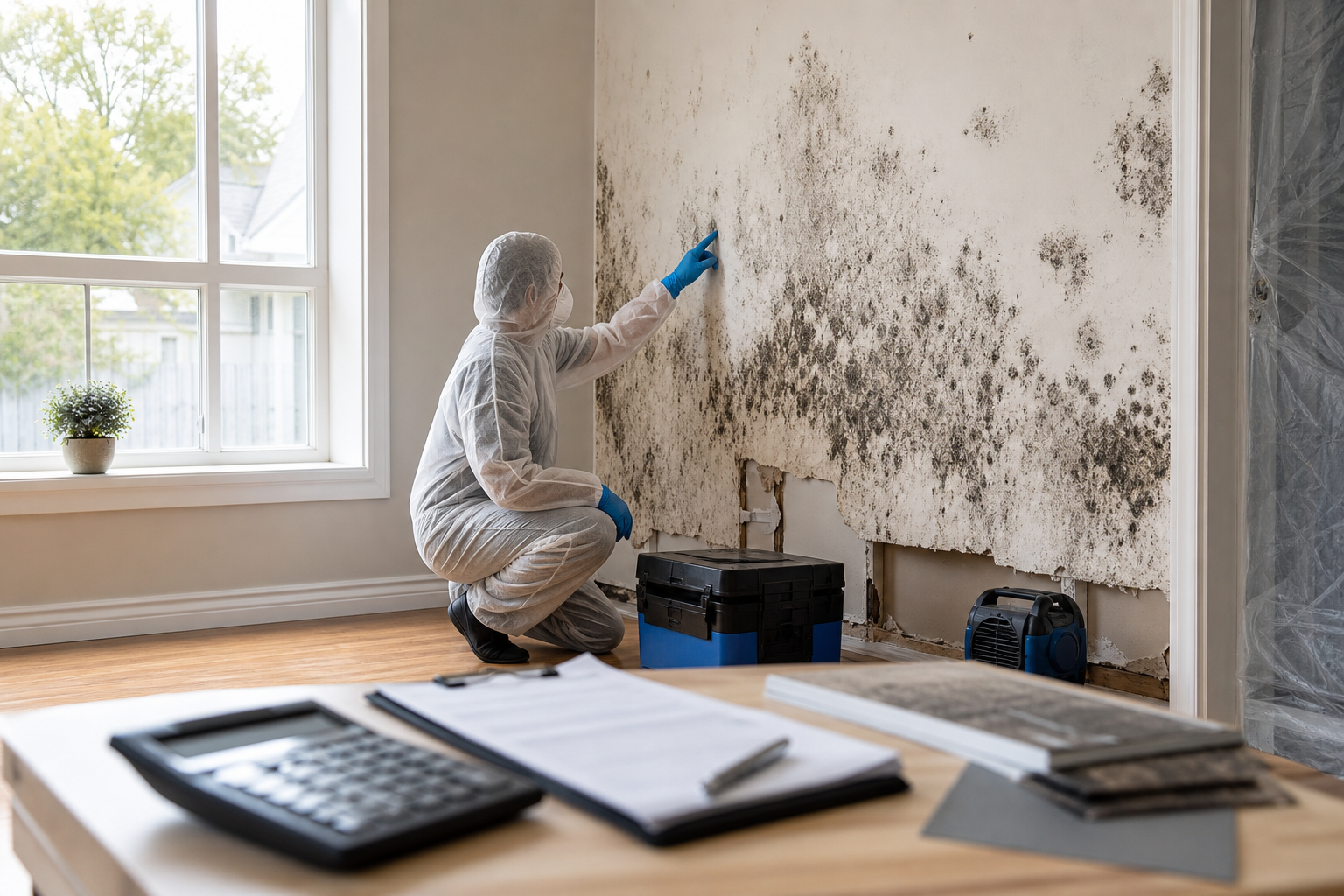
This article explains mold removal cost and gives a practical framework to estimate a realistic budget, compare contractor bids, and avoid surprises. You will learn the specific line items that move any quote, which services are normally included versus commonly extra, a step-by-step checklist to compare estimates, and when to hire a professional for safe, effective remediation. For regional cost breakdowns and diagnostic versus remediation pricing, see the Canadian cost guide referenced below.
The six cost drivers that move any mold removal quote
Two bids for the same house often differ because contractors price different risks and tasks separately. Understanding the main cost drivers helps you read a quote intelligently and budget for likely extras. Contractor cost guides for Canada and the Toronto region identify these six drivers as the ones that most commonly change a final invoice.
1. Diagnostic inspection and testing
Inspection, moisture assessment, and any lab testing to identify species and extent are usually a separate line item. Contractors use thermal imaging and moisture meters during inspection, and some include air or surface samples when the scope is unclear. Authoritative Canadian guides treat diagnostic fees as the first budget item that determines whether a simple clean or a full remediation is required, so expect a quoted inspection fee or a free inspection offer depending on the contractor's policy. See the Canadian cost guide for more on this stage: MoldInspection.ca remediation cost guide.
2. Containment and HEPA filtration
Proper containment and negative-air with HEPA filtration protect the rest of the home and the remediation crew. When a quote omits containment, the apparent price may look lower but the job risks cross contamination and rework. This Old House warns homeowners that low bids which exclude containment or post-remediation clearance testing create hidden risk. Expect containment and HEPA equipment listed as labour and rental or equipment costs.
3. Demolition, removal and disposal
Removing contaminated materials costs more when porous insulation, drywall, or flooring must be disposed of. Disposal fees, bagging, haul-away, and hazardous-material handling are billed separately on many quotes. The Canadian cost guide separates demolition and disposal from cleaning labour because both change labour time and waste handling expenses.
4. Attic work and insulation replacement
Attic scenarios often require insulation removal, replacement, and ventilation correction. Insulation handling significantly raises the invoice because it adds labour, disposal, and the cost of new insulation. Regional sources call out attic-specific work as a frequent reason Toronto-region projects cost more than a simple surface remediation: see the Toronto overview for examples at Wright Restorations.
5. Structural repair and finish work
When mold has damaged framing, sheathing, or drywall, carpentry and restoration are added after remediation. Structural repair is a major cost driver because it involves trades that go beyond remediation crews, such as carpenters, drywallers, and painters. Confirm whether the quote includes repair or only the remediation stage.
6. HVAC cleaning and clearance testing
If HVAC systems are contaminated, duct cleaning or component replacement can be required. Post-remediation clearance testing documents that the treated area is free from active growth. Clearance testing or air quality testing are often separate, and reputable contractors include them to close the project with proof of success.
What a professional quote should include and what is commonly extra
Knowing which items belong in the base bid and which are typical extras helps you compare apples to apples. Trusted contractor resources separate core remediation work from add-ons, and you should too when evaluating estimates.
Usually included in a professional remediation quote
- Site inspection and moisture assessment, with a written scope of work.
- Containment, negative-air machines with HEPA filtration, and worker PPE.
- Removal, sealing and safe disposal of contaminated materials identified in the scope.
- Cleaning of salvageable surfaces and antimicrobial treatment where suitable.
- Lab or in‑house clearance testing if promised as part of the scope.
- Labour, equipment rental, and basic site cleanup at job completion.
Common extras that increase the final invoice
- Insulation removal and replacement, especially in attics.
- Drywall, floor, or subfloor replacement and carpentry to repair framing.
- Extensive HVAC duct replacement or component replacement rather than cleaning.
- Long-distance waste disposal or hazardous-material surcharges.
- Post-remediation repairs and finishing work when remediation-only quotes are given.
Contracts that leave core items off the initial quote and add them later are the frequent source of pricing complaints. Ask for an itemized scope so you can see which of the above are included and which are extras.
How to compare quotes: an annotated checklist you can use

Use this checklist line by line with every estimate. Ask contractors to mark each item as included, optional, or excluded. Reliable bids will answer clearly, provide documentation, and list any subcontracted trades.
- Diagnostic fee and report: included or billed separately. A free inspection offer reduces upfront cost but confirm what the inspection covers.
- Containment method: describe barriers, negative-air equipment, and HEPA filtration specifications.
- Material removal: list the materials to be removed and disposal method with estimated weight or volume.
- Insulation handling: confirm whether removal and replacement are included and the insulation type supplied.
- Structural repairs: outline whether the bid includes framing, drywall, and finishing or only remediation.
- HVAC work: state whether duct cleaning, coil cleaning, or replacement is necessary and who performs it.
- Clearance testing: specify test type, who pays, and when results will be delivered.
- Insurance and documentation: confirm contractor insurance and a written Mold Remediation Warranty Certificate when available.
- Change-order policy: how will unforeseen repairs be quoted, and what approvals are required before work continues?
- Payment schedule: holdback clauses tied to clearance testing are a best practice.
Sample contractor answers that indicate a reliable bid include clear statements such as "containment with negative-air and HEPA filtration included" and "clearance testing performed and report supplied before final payment." Answers that should prompt follow-up include vague phrasing like "we will handle insulation as needed" without price ranges or written limits.
When DIY is reasonable and when public health guidance says call a professional
Public health agencies describe when homeowners can clean small mould problems safely and when to call professionals. The EPA and the CDC suggest that small areas under a limited size may be cleaned by informed homeowners using appropriate protective equipment, but moderate to large contamination, HVAC involvement, and porous material replacement require professional remediation. For the EPA guidance on cleanup steps and when to hire a pro, see the agency overview at EPA: A Brief Guide to Mold, Moisture and Your Home and the CDC cleanup recommendations for post-disaster scenarios at CDC: Homeowners and Renters Guide to Mold Cleanup.
Ontario-specific considerations and how ASM’s local service changes budget planning

Cold-climate attic condensation, older insulation types, and attic ventilation problems are common Ontario drivers of higher remediation cost because they often require insulation replacement and ventilation correction. Regional contractor guides for the Toronto area highlight attic-specific scopes as one of the main reasons quotes rise above a simple remediation line item.
ASM Mold Removal offers Ontario-wide same-day response for urgent issues and starts with a free inspection and moisture assessment, which helps you get a documented scope quickly and avoid costly delays. The company uses HEPA filtration and containment and can deliver full repair and restoration after remediation is complete, and it issues a Mold Remediation Warranty Certificate upon completion and inspection. For details on ASM services and to request a free inspection, visit the ASM Mold Removal website or call for same-day scheduling.
Asmmoldremoval can be contacted directly by phone at 647-451-0493 for same-day assessment and an itemized quote.
How to budget and avoid the common pricing surprises
Follow these practical steps to reduce the risk of sticker shock when the invoice arrives.
- Require an itemized written quote that separates diagnostic fees, containment, labour, disposal, and repairs.
- Ask for a clear change-order policy so you know how additional work will be priced and approved.
- Reserve a contingency for insulation or framing repairs that may be discovered once demolition begins.
- Insist on clearance testing and withhold final payment until you receive the test report and the contractor's warranty certificate.
- Check references for similar jobs in Ontario and ask to see before and after documentation.
- Avoid bids that omit containment or clearance testing, or that lack proof of insurance and worker protection.
These tactics map directly to cost effects: itemized quotes make add-ons visible, change-order rules stop open-ended billing, and clearance testing reduces the risk of paying twice for the same problem.
Frequently asked questions
How much does mold removal cost in Ontario and why do prices vary so much
There is no single price because the scope ranges from a small surface clean to multi‑trade remediation with structural repairs. Costs vary based on the diagnostic findings, containment and HEPA requirements, insulation and attic work, material replacement, and whether HVAC cleaning or clearance testing is required. For regional cost breakdowns that separate diagnostic and remediation phases, see the Canadian cost guide and the Toronto-region overview referenced earlier.
What should a professional mold removal quote include before I sign
A reliable quote should include a written scope from the inspection, containment and filtration details, a material removal plan and disposal method, labour and equipment costs, whether repairs are included, details on clearance testing, insurance confirmation, and a clear change-order policy. Request a Mold Remediation Warranty Certificate on completion when available.
When is professional mold remediation required instead of a DIY clean
Professional remediation is recommended for moderate to large contamination, HVAC involvement, porous material replacement, or when mold follows significant water damage or flooding. Public health guidance from the EPA and the CDC outlines thresholds for homeowner cleanup versus professional intervention and stresses safety and proper drying and repair.
Are there common hidden fees I should watch for in mold remediation quotes
Common hidden fees include disposal surcharges, unexpected insulation replacement, long-distance waste hauling, subcontracted trades billed separately, and additional clearance testing if the first test fails. Prevent surprises by asking for itemized pricing and the conditions that trigger change orders.
Will homeowner insurance typically cover mold removal in Ontario
Insurance coverage varies by policy and by the cause of the mold. Some policies cover sudden water events but exclude long-term wear and maintenance issues. Check your policy and speak to your insurer before work begins, and ask contractors to provide documentation that insurers typically request, such as inspection reports and before and after photos.
Key sources and further reading include a Canadian remediation cost guide, a Toronto-region cost breakdown, and public health advisories on cleanup and when to call a professional: see the MoldInspection.ca cost guide, the Wright Restorations Toronto article, the EPA overview, and the CDC cleanup guidance.
Next step: use the checklist above when you request bids, and for a documented, same-day inspection and moisture assessment in Ontario, book a free inspection with Asmmoldremoval today.


