Last updated: October 2026
By ASM Mold Removal Inc. • Refreshed October 2026
What is mold mitigation?
Mold mitigation is the practical process of limiting mold growth, reducing exposure, and stopping the conditions that allow mold to return. It usually combines moisture control, containment, air filtration, cleaning, selective removal, drying, and documentation. The work is not complete simply because a stain has been sprayed or covered.
The most important principle is to find and correct the moisture source. Leaks, flooding, condensation, high indoor humidity, blocked attic ventilation, plumbing failures, and damp foundations can all support growth. Cleaning without correcting the cause may produce only a temporary improvement.
In Ontario, the words mould remediation and mould abatement are also commonly used for professional work. In this guide, mitigation describes the prevention-first actions that stabilize the building and limit spread; remediation describes the broader removal, cleaning, restoration, and verification plan that may follow.
When should you hire a mold mitigation professional?
Professional help is appropriate when growth is extensive, returns after cleaning, is inside wall or ceiling cavities, follows significant water damage, or affects an HVAC system. Health Canada identifies a single mold patch larger than three square metres, or mold that returns after cleaning, as situations requiring professional involvement. You can review that guidance in the Health Canada moisture and mould guide.
Do not disturb a large contaminated area casually. Occupants should keep children, pets, and people with asthma or other sensitivities away from the work zone, while anyone carrying out a small cleanup should use suitable gloves, eye protection, and respiratory protection. If electrical equipment is wet, stop and obtain qualified help before using it.
Signs that a problem needs escalation
- Affected materials cover a large area or continue behind finishes.
- There is a strong, persistent musty odour without an obvious visible source.
- Mold keeps returning after surface cleaning.
- Drywall, insulation, carpet, ceiling tile, paper, or other porous materials are heavily affected.
- A flood, sewer backup, roof failure, or long-standing leak has saturated the building.
- People are experiencing symptoms they associate with the indoor environment.
Ontario workplace guidance also treats sustained or extensive visible mold as unacceptable and recommends professional assistance when contamination is extensive. Employers and facility managers can consult the Ontario mould guidance for workplace buildings when planning a response.
Why mold mitigation matters
Moisture is the driver behind most indoor mold problems. Health Canada recommends controlling humidity, repairing water damage promptly, and thoroughly cleaning visible or concealed mold regardless of the species identified. A laboratory name does not replace moisture correction or safe removal.
Early mitigation can protect building materials and reduce the area that must be isolated or removed. It can also make the response easier to document for homeowners, buyers, sellers, landlords, insurers, and facility teams. The aim is not to promise that every spore can be eliminated; it is to return the affected area to a clean, dry, and reasonably controlled condition.
Ontario conditions that commonly contribute to mold
- Cold weather: warm indoor air can condense on cold attic sheathing, roof penetrations, windows, or exterior walls.
- Warm weather: basements and crawl spaces can develop elevated humidity when ventilation and dehumidification are inadequate.
- Storms and snow melt: roof leaks, foundation seepage, and failed drainage can introduce water quickly.
- Building projects: recently renovated areas can conceal wet framing, unsealed penetrations, or blocked ventilation paths.
For Scarborough and other Ontario properties, an inspection should consider the building envelope, roof and plumbing history, attic airflow, basement humidity, and any recent water event rather than focusing only on the visible patch.
How mold mitigation works step by step
A sound mold mitigation plan follows the building conditions, not a one-size-fits-all chemical treatment. The sequence below shows what a careful project should address.
1. Assess the moisture source and scope
The first step is a visual inspection supported, where useful, by moisture readings, thermal imaging, and access to concealed spaces. The assessor should document affected materials, likely water pathways, room conditions, occupant concerns, and areas that may need further investigation.
2. Make the area safe
Before cleaning begins, isolate the work zone from occupied areas. Workers should consider electrical hazards, structural damage, sewage contamination, asbestos or other designated substances, and whether occupants need to leave temporarily. Mold work should never create a new hazard by disturbing an unknown material.
3. Establish containment and air control
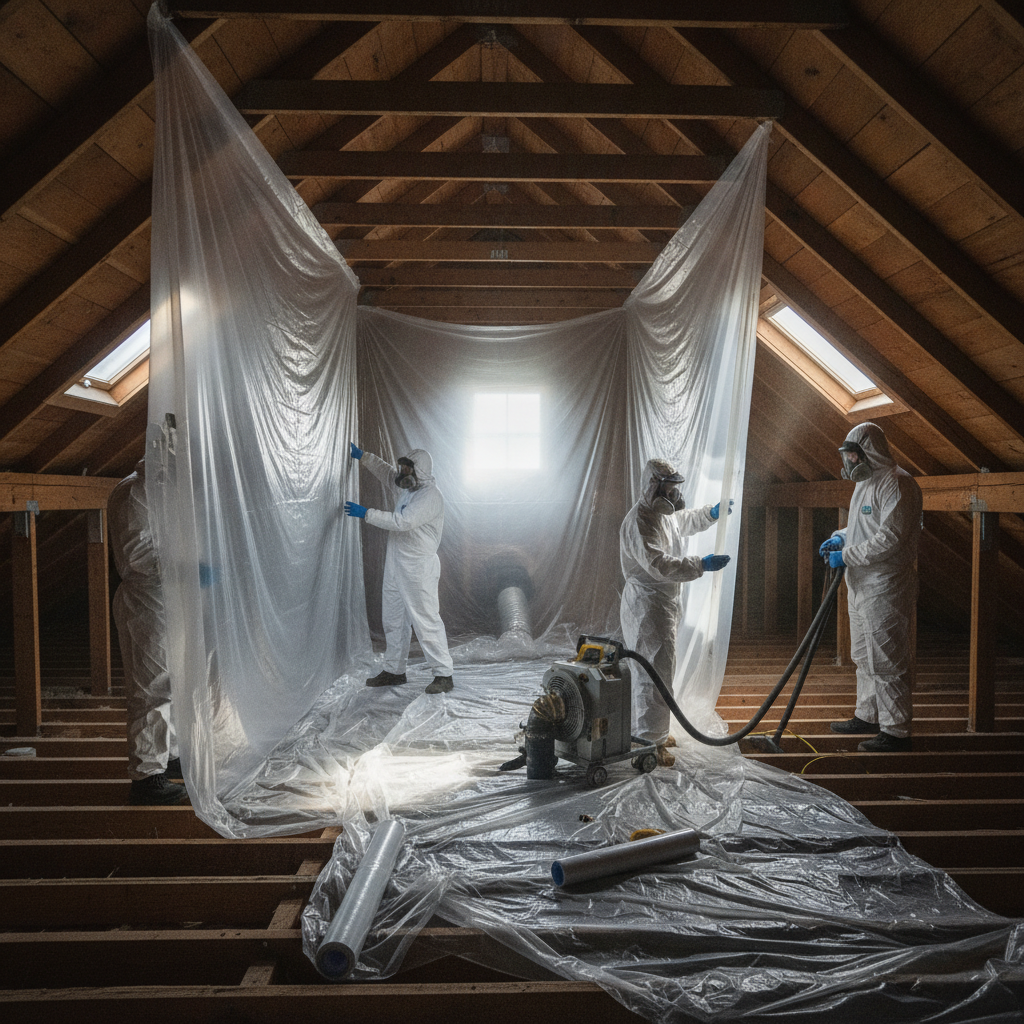
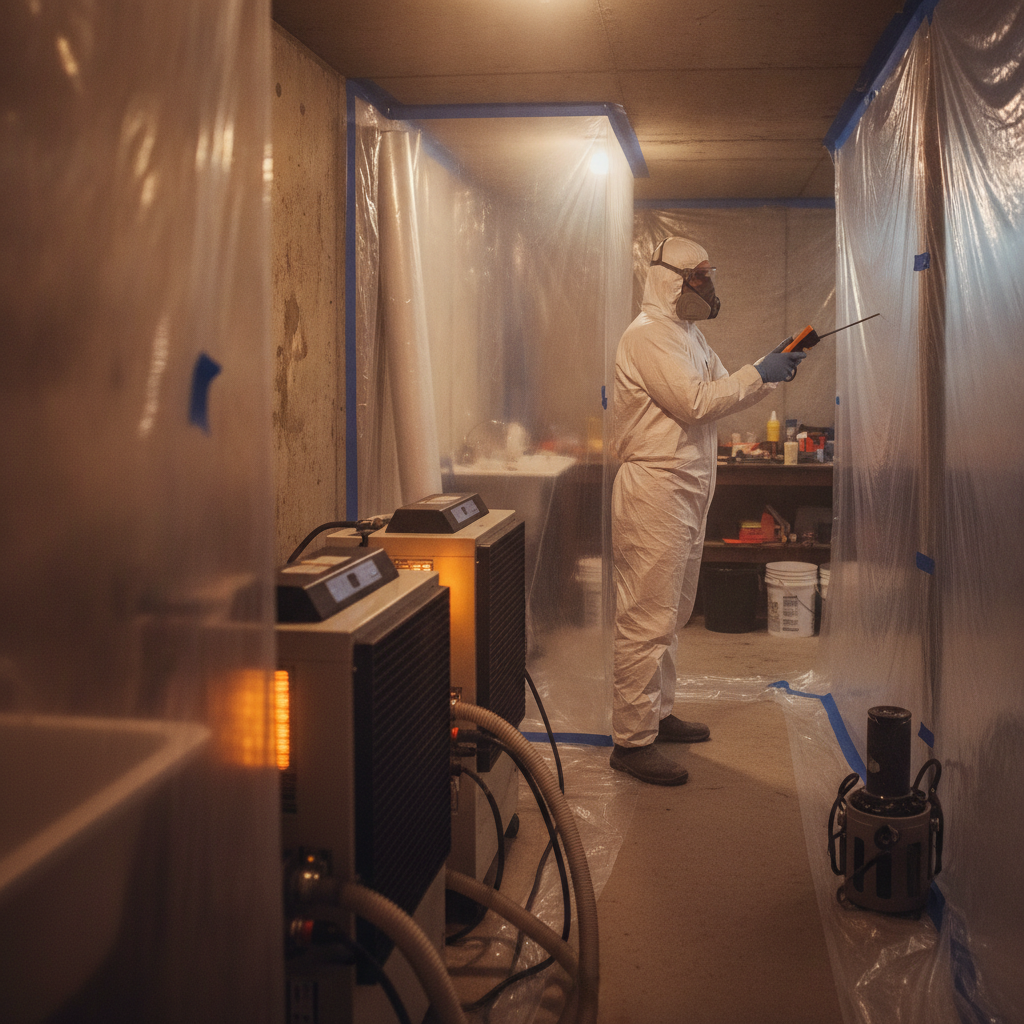
Containment may use sealed poly sheeting, zipper doors, controlled entry, and negative air. The purpose is to keep contaminated dust from moving into clean rooms. Air scrubbers and negative-air machines should exhaust or filter air in a way that suits the building and the work plan.
4. Remove or clean affected materials
Porous materials such as heavily contaminated drywall, ceiling tile, carpet, fabric, books, paper, and cardboard often need disposal rather than surface cleaning. Sound non-porous materials such as glass, metal, hard plastic, concrete, and some wood can often be cleaned, subject to their condition and the level of contamination. Debris should be sealed before it leaves the containment area.
5. Dry the structure and correct the cause
Dehumidifiers, air movers, ventilation repairs, plumbing repairs, roof work, drainage improvements, or insulation corrections may all be needed. Drying should be checked with readings and compared with unaffected materials or suitable building baselines. The underlying cause must be corrected before the project is considered stable.
6. Clean, treat, and verify
HEPA vacuuming, damp wiping, and repeat cleaning can remove settled particulate from suitable surfaces. A product treatment may be appropriate for a specific cleaned substrate, but no antimicrobial product substitutes for removal and moisture control. Final verification should include visual inspection, moisture readings, photographs, and testing only when it answers a defined question.
| Project stage | Purpose | Evidence of progress |
|---|---|---|
| Assessment | Identify moisture and affected areas | Inspection notes, photos, and moisture map |
| Containment | Prevent cross-contamination | Sealed barriers and controlled airflow |
| Removal or cleaning | Reduce contaminated material and dust | Bagged debris and cleaned surfaces |
| Drying | Stop conditions that support growth | Stable readings and corrected source |
| Verification | Confirm the planned work is complete | Visual review, readings, and targeted testing where justified |

Mold mitigation by area
Attic mold removal
Attic mold is often connected to roof leaks, bathroom fans exhausting into the attic, blocked soffit vents, insufficient insulation, or warm moist air escaping through ceiling penetrations. A proper attic mold removal plan should investigate ventilation and air leakage before treating the visible sheathing or trusses.
Depending on the condition, workers may isolate the attic access, remove contaminated insulation, HEPA-clean framing, correct the ventilation path, and address roof or duct problems. Covering stained wood without resolving condensation can allow the problem to return during the next cold season.
Basements
Basement mold commonly follows seepage, plumbing leaks, wet carpet, foundation cracks, or summer humidity. The response may include water extraction, dehumidification, selective drywall and baseboard removal, cleaning of sound framing, and repairs to drainage or plumbing. Finished basements deserve particular care because mold can remain behind walls or under flooring.
Crawl spaces
Crawl spaces can hold moisture from exposed soil, standing water, poor drainage, or inadequate air control. Mitigation may involve a ground moisture barrier, improved drainage, controlled ventilation or dehumidification, removal of damaged insulation, and cleaning of accessible framing. The space should be inspected for plumbing leaks and wood deterioration as well as mold.
HVAC systems
Do not assume that a musty room means the entire duct system is contaminated. An assessment should look at filters, coils, drain pans, condensate lines, air handlers, and accessible duct surfaces. If contamination is confirmed in HVAC components, cleaning and correction should be planned so the system does not redistribute particles after the work area is opened.
Commercial buildings
Offices, schools, retail spaces, warehouses, and healthcare facilities need a plan that protects occupants while preserving operations. Staged containment, after-hours work, pressure control, clear access restrictions, and daily records can help facility teams keep unaffected areas open. Employers should also document the water source, affected rooms, worker protection, and reopening criteria.
Tools and best practices for mold mitigation
Professional crews may use moisture meters, thermal imaging, borescopes, HEPA vacuums, air scrubbers, negative-air machines, dehumidifiers, air movers, containment materials, and cleaning equipment. The tool matters less than whether it is selected for the material and used within a documented process.
- Control moisture first: repair leaks, improve drainage, correct condensation, and manage humidity.
- Protect clean areas: use sealed barriers, controlled entry, and appropriate pressure differentials.
- Use HEPA capture: vacuum and filter air during disturbance rather than sweeping or blowing contaminated dust.
- Remove porous materials when necessary: heavily contaminated drywall, insulation, carpet, and ceiling tile may not be reliably cleanable.
- Keep records: retain photos, readings, work dates, affected materials, repairs, and verification notes.
- Use treatments carefully: follow the product label and never present a coating or antimicrobial as a replacement for removal and drying.
The CMHC mould-in-housing guidance also emphasizes prompt assessment, source identification, protective equipment for small cleanups, and isolation when an area is too large to clean safely.
Common mold mitigation decisions
Should you clean or discard a material?
Consider porosity, contamination level, structural condition, and whether the material can be accessed and dried completely. Sound metal, glass, hard plastic, concrete, and some wood may be cleaned. Heavily affected drywall, insulation, ceiling tile, carpet, paper, and cardboard are commonly removed because mold can penetrate their fibres or backing.
Should you test before starting?
Testing is not automatically required when visible mold and the moisture source are clear. It can help investigate hidden contamination, establish a baseline, support clearance documentation, or answer a specific dispute. Testing should inform a decision; it should not delay urgent drying or be used to select a “safe” species for continued exposure.
What should a homeowner expect from documentation?
A useful report identifies the source, affected areas, materials removed or cleaned, containment method, drying progress, repairs recommended, and final observations. Photos and moisture readings make the record more useful than a generic statement that a room was treated. ASM Mold Removal Inc. provides a free inspection and moisture assessment, same-day response for urgent Ontario issues, and a Mold Remediation Warranty Certificate upon completion and inspection as part of its stated service offering.
Plan mold mitigation with ASM
ASM Mold Removal Inc. serves residential and commercial properties across Ontario, including attics, basements, crawl spaces, HVAC systems, offices, retail locations, warehouses, schools, and healthcare facilities. Its stated process begins with inspection and moisture assessment, followed by containment, HEPA filtration, cleaning or removal, drying, and prevention planning where appropriate.
For an urgent leak, recurring attic growth, or a musty basement, request a mold inspection and moisture assessment. A site-specific review can clarify whether the next priority is drying, source repair, selective removal, testing, or a broader remediation plan.
Frequently asked questions about mold mitigation
Can I mitigate a small patch of mold myself?
A small, accessible area may be suitable for careful cleaning if the moisture source is fixed and the material can be safely reached. Use gloves, eye protection, and suitable respiratory protection, and avoid disturbing the area unnecessarily. Larger patches, recurring growth, hidden moisture, sewage contamination, or affected porous materials warrant professional assessment.
Does mold mitigation remove every mold spore?
No. The practical goal is to remove or clean affected materials, reduce settled contamination, dry the building, and prevent abnormal growth from returning. A clean, dry, controlled environment is a more useful outcome than a promise of a completely spore-free building.
How long does mold mitigation take?
Timing depends on the source, affected materials, access, drying needs, and whether repairs are required. A small, isolated area may stabilize quickly, while wet insulation, damaged drywall, an attic ventilation problem, or a commercial project can require several stages. The contractor should explain the sequence and what must be dry or repaired before completion.
What is the difference between mitigation and remediation?
Mitigation focuses on immediate stabilization: controlling moisture, containing the area, filtering air, and limiting spread. Remediation is the broader project of removing or cleaning affected materials, restoring the space, and verifying the result. In practice, the terms overlap, and a qualified contractor should define the actual work rather than rely on the label.
Get a moisture-first mold mitigation plan
Mold mitigation works best when it addresses the cause as well as the visible growth. If you are dealing with attic condensation, a wet basement, recurring mold, or a commercial water event in Ontario, arrange an inspection that documents moisture, scope, containment needs, and the safest next step. Contact ASM Mold Removal Inc. to discuss an assessment and prevention-focused response.


