Last updated: October 2026
By ASM Mold Removal Inc.
What this black mold removal guide covers
People commonly use “black mold” to describe dark indoor mould, particularly Stachybotrys chartarum. Colour alone cannot identify a species or determine risk. For a safe response, treat visible mould as evidence of excess moisture and focus first on finding and correcting the water source.
This guide explains how to recognize a potential problem, decide when professional mould remediation is appropriate, understand the work sequence, and reduce the chance of regrowth. It applies to homes and commercial spaces in Scarborough and across Ontario, including attics, basements, crawl spaces and areas affected by HVAC condensation.
- First priority: stop leaks, seepage, condensation or other moisture before cleaning.
- For small areas: follow appropriate precautions and avoid disturbing mould unnecessarily.
- For extensive or hidden growth: use containment, professional assessment and a documented remediation plan.
- For prevention: keep materials dry and indoor relative humidity below 60%, with 40–50% often a practical target.
What is black mould?
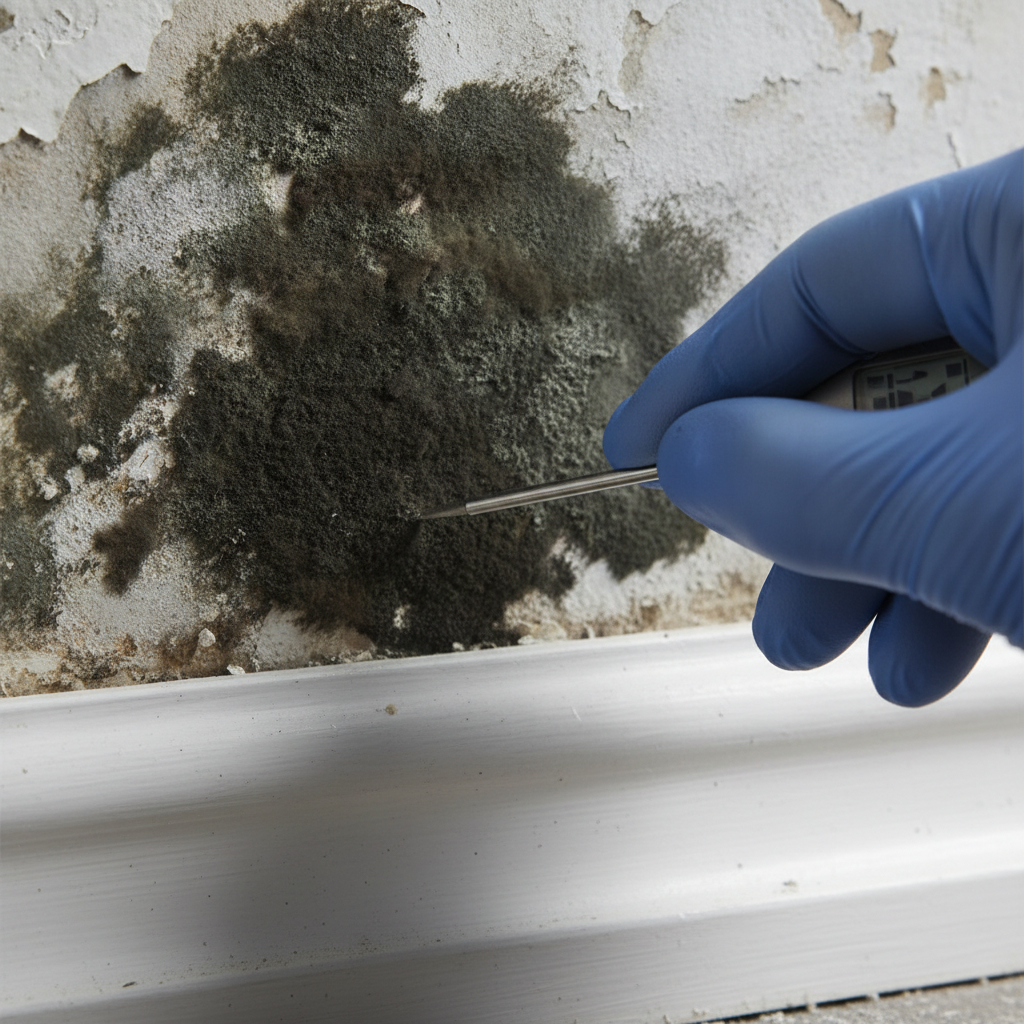
“Black mould” is a consumer term for mould that appears black or very dark. Several species can look similar, and a visual inspection cannot reliably establish the species. Testing is not always necessary before action: where visible growth and water damage are clear, removing the mould and correcting the moisture problem may be more useful than delaying cleanup for test results.
Common signs include a musty odour, dark or discoloured patches, peeling paint, swollen baseboards, soft drywall, condensation and repeated staining after rain or snowmelt. Growth may be visible around windows, behind furniture, in basement corners, on attic sheathing or near an HVAC condensate line. Hidden mould can also develop behind drywall or beneath flooring after an earlier leak.
Typical moisture sources
- Roof leaks, ice-related water entry and blocked or poorly designed attic ventilation.
- Foundation seepage, plumbing failures, sump problems and damp basement walls.
- Bathroom exhaust fans that discharge into an attic instead of outdoors.
- Condensation around windows, cold corners, ductwork or air-conditioning equipment.
- Flooding or slow leaks that leave drywall, insulation, wood or flooring damp.
An inspection should identify both the visible condition and the cause. ASM Mold Removal Inc. begins with a free inspection and moisture assessment, then uses the findings to determine whether cleaning, material removal, drying, repairs or additional investigation is appropriate. You can arrange a mould inspection and moisture assessment if the source is unclear or growth is returning.
When should you arrange professional black mold removal?
Professional help is appropriate when mould is extensive, affects porous building materials, appears in an HVAC system, is hidden in a wall or ceiling, follows significant water damage, or keeps returning after cleaning. Health Canada describes a single mould patch larger than three square metres as a large area requiring immediate action and professional assessment. Its guidance also distinguishes small areas as one to three patches under one square metre each, and medium areas as more than three patches or patches between one and three square metres.
Size is not the only decision factor. A smaller area may still require professional work if it is in a difficult-to-isolate location, if occupants are medically sensitive, if the moisture source is active, or if the property needs documentation for a sale, insurance file or facility record. A qualified company should explain the proposed inspection and cleanup procedures, health and safety considerations, costs, warranties and any follow-up inspections.
Questions to ask before hiring a company
- How will you locate and correct the moisture source?
- Which materials can be cleaned, and which must be removed?
- How will the work area be contained to limit cross-contamination?
- What air filtration, drying and waste-handling controls will be used?
- Will the company provide a written scope, photographs and follow-up information?
- Does the company carry liability insurance for mould removal work?
Health Canada’s guide to addressing moisture and mould indoors provides useful questions for planning cleanup and evaluating the condition. For professional hiring details, its mould remediation guidance PDF emphasizes written procedures, insurance, safety information, warranties and follow-up where needed.
How professional black mold removal works
Effective remediation is a controlled process rather than a quick application of bleach or antimicrobial product. The exact scope depends on the affected materials, the extent of growth and the moisture source, but a typical Ontario project follows these stages.
1. Assessment and moisture mapping
The technician reviews the history of leaks or condensation, inspects accessible areas and measures moisture in relevant materials. Thermal imaging, borescopes or air and surface sampling may be useful in selected situations, but testing should support a decision rather than delay an obvious cleanup.
2. Source control and work planning
The leak, seepage, ventilation defect or condensation problem must be addressed. The scope should identify materials for cleaning, removal, drying and restoration, along with occupant-safety arrangements and the route for moving debris out of the property.
3. Containment and air control
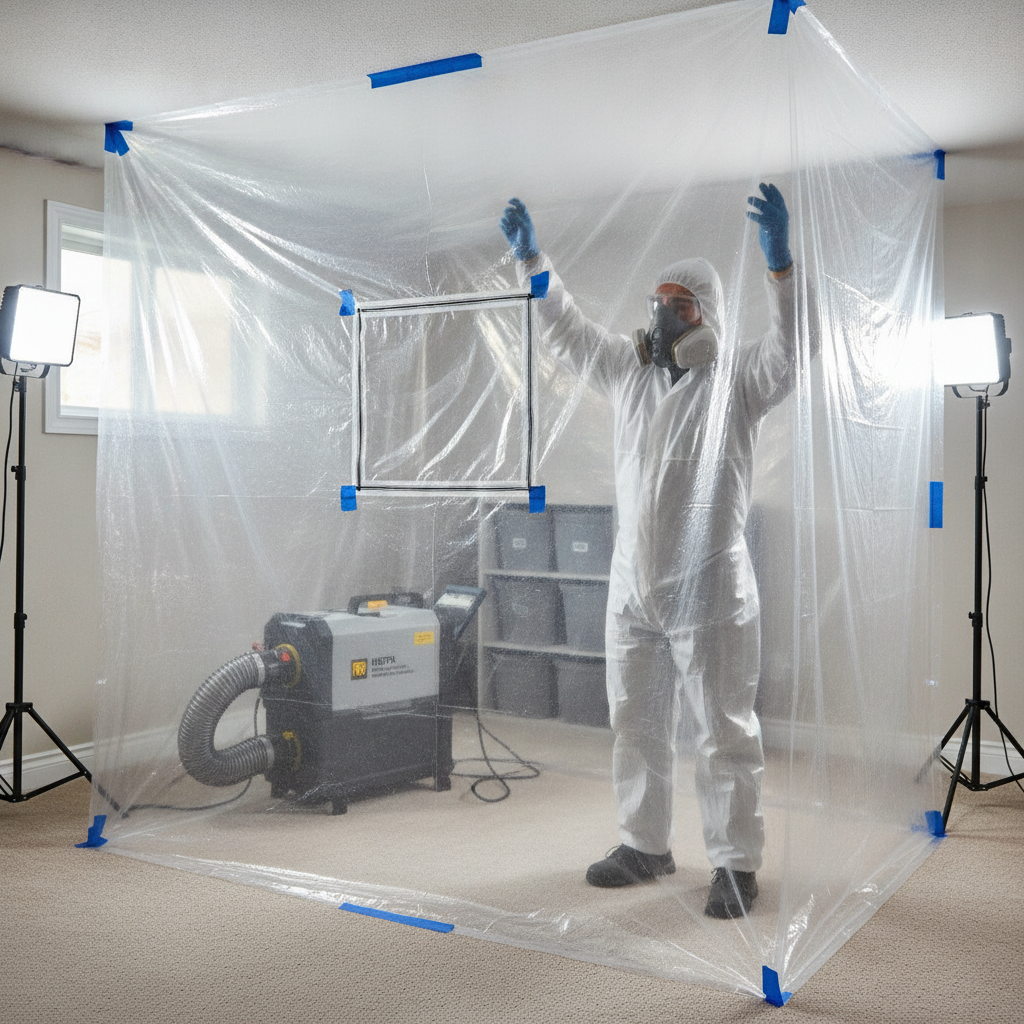
Plastic barriers, sealed openings and zippered access points separate the work zone from occupied areas. Negative air and HEPA air scrubbers help control airborne particles while contaminated materials are disturbed. The setup should be sized and operated for the space rather than treated as a decorative barrier.
4. Removal of damaged porous materials
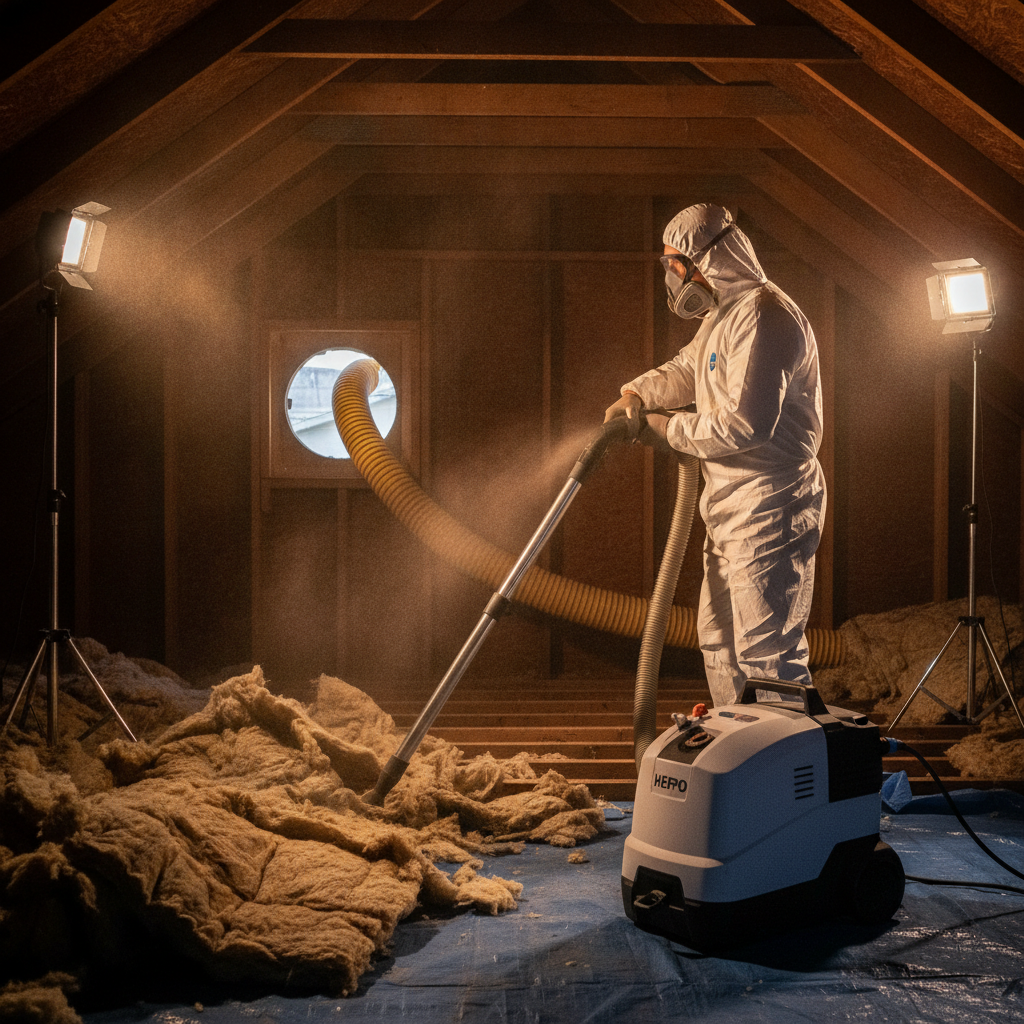
Drywall, insulation, carpet, ceiling tiles and other porous materials may not be restorable when mould has penetrated them or when they remain wet. Materials are removed carefully, sealed for disposal and replaced only after the underlying area has been cleaned and dried.
5. HEPA cleaning and detailed surface work
Remaining framing, sheathing and nearby surfaces may be HEPA vacuumed and damp-wiped using methods suited to the material. Products should be used according to their label and the project scope; an antimicrobial treatment cannot substitute for moisture control, physical removal or proper drying.
6. Drying, restoration and verification
Dehumidifiers and directed airflow help bring materials back to suitable moisture conditions. The final review should confirm that the source has been controlled, affected materials have been addressed, the area is visibly clean and no new moisture problem remains. When requested, post-remediation sampling can provide additional information, but clearance decisions should not rely on a single test result alone.
How the approach changes by area
Attics
Attic mould often reflects a combination of warm indoor air leakage, inadequate intake or exhaust ventilation, bathroom fans venting into the attic, and condensation during cold weather. Remediation may include cleaning or removing affected sheathing and insulation, then correcting duct routing, air sealing and ventilation. In Scarborough’s older detached homes, an attic inspection should also consider the age and condition of insulation and other building materials before disturbance.
Basements and crawl spaces
Basement and crawl-space work starts with seepage, plumbing leaks, groundwater, damp foundations and ground moisture. Dehumidification alone is not a complete solution if water continues to enter. Affected drywall, baseboards or insulation may need removal, followed by cleaning, structural drying and repairs that keep the space dry.
HVAC systems
Air handlers, condensate pans, filters and nearby insulation can collect moisture and dust. If mould is suspected inside HVAC equipment or air distribution components, avoid operating the system in a way that spreads contamination and arrange an assessment. Cleaning should address the affected components and the source of condensation.
ASM Mold Removal Inc. serves residential and commercial properties across Ontario, including offices, retail spaces, warehouses, schools and healthcare facilities. Its service description includes containment, HEPA filtration, eco-friendly EPA-approved products, drying and restoration when required. Details about the company’s process and service scope are available on the ASM Mold Removal Inc. about page.
How to prevent mould from returning
Removal is only successful when the moisture condition is corrected. Use a hygrometer to monitor humidity, especially in basements and crawl spaces, and investigate sudden changes rather than waiting for visible staining.
Control water and humidity
- Repair roof, plumbing, foundation and window leaks promptly.
- Keep indoor relative humidity below 60%; a 40–50% range can provide a useful operating target where practical.
- Use dehumidification in damp basements and verify that condensate drains correctly.
- Dry wet materials quickly after a leak or overflow and remove materials that cannot be dried thoroughly.
Improve ventilation and inspect seasonally
- Vent bathroom and kitchen exhaust outdoors, not into attics or wall cavities.
- Check attic intake and exhaust paths, insulation coverage and signs of winter condensation.
- Inspect basement corners, rim joists, sump areas and window wells after heavy rain or snowmelt.
- Keep furniture slightly away from cold exterior walls so air can circulate.
- Replace HVAC filters as recommended and investigate persistent odours or condensation.
For additional household guidance, review Health Canada’s recommendations for reducing humidity, moisture and mould. Local weather changes in Scarborough make spring inspections after snowmelt and late-summer humidity checks particularly practical, but any active leak should be addressed immediately.
DIY versus professional cleanup
Homeowners can generally consider cleaning small areas on hard, non-porous surfaces when the moisture source has been fixed, the area can be isolated and no vulnerable occupant is exposed to disturbance. Do not dry-brush, sand or use fans in a way that spreads particles. Wear appropriate protective equipment and follow product directions.
| Situation | Careful homeowner cleaning may fit | Professional assessment is preferable |
|---|---|---|
| Extent | One to three small patches, each under 1 m² | One area over 3 m², many patches or uncertain extent |
| Material | Hard, non-porous tile, metal or sealed surface | Drywall, insulation, carpet, subfloor or other porous material |
| Moisture | Short-term condensation that is resolved | Active, recurring or concealed leaks and seepage |
| Location | Accessible room with good separation | Attic, crawl space, HVAC system, wall cavity or occupied commercial area |
| Documentation | No formal record is needed | Insurance, sale, rental, facility or warranty documentation is required |
Do not disturb suspect materials that may contain other hazards. Older buildings can contain asbestos or lead-containing materials, so a qualified assessment is important before cutting, sanding or removing materials when their composition is uncertain.
Frequently asked questions
Can you tell whether mould is toxic by its colour?
No. Dark colour does not prove that mould is a particular species or establish a health risk. A qualified inspection considers the moisture source, affected materials, extent and occupant circumstances; sampling may be recommended when it answers a specific question.
What is the fastest way to stop black mould from spreading?
Stop the water source, limit access to the affected area and avoid disturbing contaminated materials. For extensive growth or porous materials, arrange professional containment, HEPA filtration, removal and drying rather than attempting to cover the mould with paint or a surface treatment.
Does black mould removal remove the cause permanently?
Not by itself. The cause is addressed only when leaks, seepage, condensation, ventilation or humidity problems are corrected and the affected area is dried. Follow-up monitoring is useful when the original moisture source was recurring or concealed.
Can ASM Mold Removal Inc. provide documentation?
ASM Mold Removal Inc. provides project information such as scope details and photographs, and its business service description states that completed and inspected projects are backed by a Mold Remediation Warranty Certificate. Ask what documentation and follow-up are included in the proposed scope before work begins.
Arrange a black mold removal assessment
If you see persistent mould, smell a musty odour or have experienced water damage, start by controlling the moisture and limiting disturbance. ASM Mold Removal Inc. provides a free inspection and moisture assessment, Ontario-wide service and same-day response for urgent issues, with options for containment, HEPA filtration, removal, drying and restoration.
Contact ASM Mold Removal Inc. to discuss black mould removal for your property.


